
 Español
 한국어
 Русский
 हिन्दी
 Português
 Türkçe
 Tiếng Việt
 Italiano
 Français
 日本語

Dark Souls Remastered Guide: Class, Route, Bosses and Tips
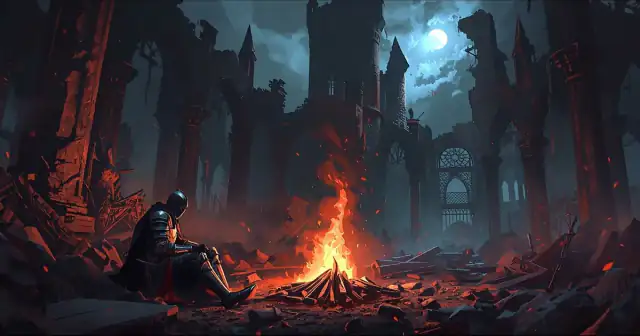
Which class to pick, which gift to take, the route to Anor Londo, the bosses in order and the mechanics the game never explains.
Dark Souls Remastered guide: what you need to know before you start
To start well in Dark Souls Remastered, pick a balanced class (the Warrior or the Hunter are the ones most often recommended to beginners), raise Vitality and Endurance first, rest at bonfires to set your respawn point and follow this route: Undead Asylum, Undead Burg and Undead Parish, Bell of Awakening, Depths and Blighttown, Sen's Fortress and Anor Londo. There is no "bad" class: they are really just starting sets of gear and stats, and you can change direction as you level up.
Key facts about the game
| Fact | Detail |
|---|---|
| Release | May 25, 2018 on PS4, Xbox One and PC (May 24 in Japan); October 19, 2018 on Nintendo Switch |
| Content | Base game plus the Artorias of the Abyss expansion |
| Performance | 60 fps target on PS4, Xbox One and PC; 30 fps on Switch |
| Multiplayer | Dedicated servers and up to 6 players per session, with password-protected sessions |
| World | Lordran, with no fast travel until you get the Lordvessel |
| Maximum level per stat | 99 |
What changes compared to the original Dark Souls
The level design is the same; what changes is the technique and the comfort. You get a better resolution and 60 fps, the expansion is included, you can switch covenants at any bonfire, consumables can be selected in bulk and there is a new bonfire next to the blacksmith Vamos. The location of the Dried Finger also changes: it is now sold by the merchant in the Undead Burg. Buttons can be remapped.
Which class to pick in Dark Souls Remastered
The ten classes add up to almost identical stats; what sets them apart is the distribution, the gear and the starting level. The starting level is misleading: a class at level 1 is not weaker, it simply began with its stats spread out more.
| Class | Level | Vit. | Att. | End. | Str. | Dex. | Res. | Int. | Fth. |
|---|---|---|---|---|---|---|---|---|---|
| Warrior | 4 | 11 | 8 | 12 | 13 | 13 | 11 | 9 | 9 |
| Knight | 5 | 14 | 10 | 10 | 11 | 11 | 10 | 9 | 11 |
| Wanderer | 3 | 10 | 11 | 10 | 10 | 14 | 12 | 11 | 8 |
| Thief | 5 | 9 | 11 | 9 | 9 | 15 | 10 | 12 | 11 |
| Bandit | 4 | 12 | 8 | 14 | 14 | 9 | 11 | 8 | 10 |
| Hunter | 4 | 11 | 9 | 11 | 12 | 14 | 11 | 9 | 9 |
| Sorcerer | 3 | 8 | 15 | 8 | 9 | 11 | 8 | 15 | 8 |
| Pyromancer | 1 | 10 | 12 | 11 | 12 | 9 | 12 | 10 | 8 |
| Cleric | 2 | 11 | 11 | 9 | 12 | 8 | 11 | 8 | 14 |
| Deprived | 6 | 11 | 11 | 11 | 11 | 11 | 11 | 11 | 11 |
Recommendations depending on how you want to play
- If you don't know what to pick: Warrior. Its starting weapon and armor are better than those of other dexterity classes, and Push Square recommends it as the safe option. The Hunter, who starts with a bow and very well-rounded stats, is the other recommended choice for beginners.
- Brute strength: the Bandit starts with an axe that hits hard from the beginning, although his very low Dexterity limits the weapons you can use early on.
- Dexterity: the Wanderer starts with a scimitar that is very useful early on and armor with good resistances.
- Magic: the Sorcerer has the most powerful offensive spells, but needs a lot of Intelligence and Attunement. The Pyromancer gets a Pyromancy Flame and the Fireball pyromancy right away, which helps against the Asylum Demon and the armored boar in the Undead Burg. The Cleric relies on healing and miracles and needs Faith and Attunement.
- Knight: his heavy armor makes him slower at first; most beginner guides suggest another class.
- Thief: the only class that starts with the Master Key; more on that below.
Your class matters little in the long run: since levels are bought with souls, a Knight can end up with Intelligence and a staff and play like a mage.
Starting gift: which one to choose
When you create your character you choose a gift. It is usually a temporary advantage, because almost all of these items can be found later in the game.
| Gift | What it does |
|---|---|
| Master Key | Opens ordinary locks and saves you from hunting for several keys: the house in the Undead Burg, Lautrec's cell, a shortcut to the Depths and another to New Londo Ruins |
| Divine Blessing | Holy water that restores health and cures status effects |
| Twin Humanities | Extra humanity to kindle bonfires or return to human form |
| Black Firebomb | A throwable bomb stronger than the regular one |
| Binoculars | For looking at distant objects |
| Pendant | No direct effect; a keepsake item |
| Tiny Being's Ring | Raises your maximum health slightly |
| Old Witch's Ring | Boosts pyromancy |
The Master Key is the best choice for almost everyone. If you play a Thief, don't take it: you already have it, and duplicating it wastes a gift.
Stats: what each one raises
- Vitality: maximum health. The gain is very strong over the first 50 levels.
- Attunement: memory slots for spells. The first costs 10 points; the next ones ask for 12, 14, 16, 19, 23, 28, 34, 41 and 50.
- Endurance: stamina and equip load.
- Strength and Dexterity: improve the weapons that scale with them (the letters S, A, B, C, D and E show how much).
- Resistance: natural defense and poison resistance.
- Intelligence and Faith: boost sorceries and miracles and some casting tools.
Pyromancy does not scale with any stat, but with the level of your Pyromancy Flame. Sorceries need a staff, miracles a talisman and pyromancies the flame.
How far it is worth raising each stat
| Stat | Point after which it pays off little |
|---|---|
| Vitality | 30 (useful maximum, 50) |
| Endurance | 40 |
| Strength and Dexterity | 20 (useful maximum, 40) |
| Resistance | 15 (useful maximum, 30) |
| Intelligence | 40 (useful maximum, 50) |
| Faith and Attunement | 50 |
You can go up to 99, but Push Square recommends not going past those values. For a Strength build, for example, 40 Strength and 20 Dexterity works well and then you stop. In addition, 3DJuegos advises staying below roughly level 120 if you want to play online, because matchmaking depends on your level.
Basic mechanics the game doesn't explain
Souls, bonfires and the Estus Flask
Souls are experience and money at the same time. If you die you lose the ones you carry, which stay in a bloodstain where you fell: pick them up without dying first or you will lose them forever. You level up by resting at a bonfire, which is also your respawn point (lighting it is not enough: you have to rest) and restores enemies and consumables.
The Estus Flask is your healing. A normal bonfire refills 5 uses; spending a humanity at the bonfire ("kindling") raises that to 10, and with the Rite of Kindling item it can reach 15 and 20. Every time you hand a Fire Keeper soul to a Fire Keeper, the flask improves up to +7: from 300 healing points per use to 800.
Humanity, human form and hollowing
- Regaining human form costs 1 humanity. In human form you can summon allied phantoms and invade other worlds, but you can also be invaded.
- If you die in human form you become hollow. While hollow you cannot kindle bonfires or summon help, but you are less likely to be invaded.
- With 10 humanities you reach the maximum item discovery, and humanity also raises defense.
- The Ring of Sacrifice keeps you from losing your human form and your humanity when you die.
Combat and movement
- Dodge the hit, not the start: the invulnerability window is short; roll when the attack is about to land.
- Equip load: below 25% of your maximum load you roll fast; between 25% and 50%, at medium speed; above 50%, slowly and with much less invulnerability. Endurance raises the limit.
- Backstab: approach slowly from behind and press R1. It can kill some enemies in a single hit.
- Parry (L2): if you throw it right as the attack arrives, you take no damage and leave the enemy open. The hollow knights in the Undead Burg are good for practice.
- Keep your shield up (L1) when exploring new areas: it only drains stamina when you block a hit.
- Walls: your weapon can bounce off in narrow spaces; use short weapons or a halberd.
Recommended route, step by step
Dark Souls has no fast travel at the start, so the key is opening shortcuts. This is the order recommended by 3DJuegos, adapted to the Remastered.
- Undead Asylum: leave the cell, pick up the gear in the archers' corridor and talk to Oscar of Astora, who gives you the first Estus Flask and the key to continue. Against the Asylum Demon, jump on him with R1 after the fog to start with an advantage.
- Firelink Shrine: this will be your base of operations. Here a fallen warrior explains the two bells.
- Undead Burg: kill or dodge the Taurus Demon and buy from the merchant (soapstone, bottomless box and the Dried Finger). Near the dragon bridge you will find Solaire of Astora, who gives you the white soapstone; if you treat him well, you can summon him against bosses.
- Undead Parish: the blacksmith Andre of Astora is in the tower next to the entrance of Sen's Fortress. Climb the stairs to the Bell Gargoyle and ring the first Bell of Awakening at the top of the tower.
- Depths and Blighttown: take the key from the lower room where you fought the boar; open the door to the dragon bridge. The Capra Demon guards the key to the Depths. Further on is the second bell, in Quelaag's Domain, after defeating Quelaag.
- Useful shortcut: with the Master Key you can open, from New Londo Ruins, a shortcut to the second bell. If you don't have it, you can enter through the hidden cave in the Darkroot Basin, near the black knight, dodging the dragons.
- Sen's Fortress: once both bells are rung its gates open. Beware of the rolling boulders, the floor tiles and the scythes. At the end the Iron Golem awaits.
- Anor Londo: with the golem defeated you reach the city. Turn the central mechanism, climb to the cathedral and defeat Ornstein and Smough in the great hall. Afterwards you will get the Lordvessel, which lets you travel between bonfires.
- After Anor Londo: place the vessel in the Kiln of the First Flame, beneath Firelink Shrine, and look for the souls of the four Lords.
Do not attack Gwynevere: doing so darkens Anor Londo, makes you a target for Darkmoon invasions and ruins that playthrough.
Main story bosses in order
| Boss | Where | Notes |
|---|---|---|
| Asylum Demon | Undead Asylum | The first one; attack from above with R1 to start |
| Taurus Demon | Undead Burg | Easier than average, but demanding for a newcomer |
| Bell Gargoyle | Undead Parish | The bell is at the top of the tower |
| Capra Demon | Lower Undead Burg | Guards the key to the Depths |
| Quelaag, the Chaos Witch | Quelaag's Domain | The second bell is behind her |
| Iron Golem | Sen's Fortress | Defeating him takes you to Anor Londo |
| Ornstein and Smough | Anor Londo | After beating them you receive the Lordvessel |
| Nito, Seath the Scaleless, Four Kings, Bed of Chaos | Tomb of the Giants, Crystal Cave, New Londo Ruins, Lost Izalith | The four Lord Souls that open the ending |
| Gwyn, Lord of Cinder | Kiln of the First Flame | Final boss; shield counterattacks work on almost all his moves |
There are also optional bosses such as the Gaping Dragon, Ceaseless Discharge or Gwyndolin, and the expansion adds Artorias, Manus, Kalameet and the Sanctuary Guardian. The first fight against Seath the Scaleless is impossible to win: it is not your fault.
Secrets and optional content worth your time
- Painted World of Ariamis: reached from Anor Londo, through the room of the painting guardians. You need the doll from the starting cell of the Asylum.
- Darkmoon Tomb: where Gwyndolin is, near the cathedral door mechanism.
- Duke's Archives: once you place the vessel the golden fog disappears. Inside, a golden golem drops a cracked pendant that unlocks the areas of Artorias of the Abyss from the Darkroot Basin.
- Catacombs and Tomb of the Giants: the entrance is in the skeleton graveyard of the Shrine, next to Frampt's hole. Bring a light source, a divine weapon and a bow.
- Gravelord Servant covenant: requires an Eye of Death and resting for about 30 seconds in the coffin near the titanite demon.
Typical beginner mistakes
- Spending special souls. Don't consume Fire Keeper souls or boss souls: they upgrade the flask and unlock special weapons. Soldier, knight or nameless hero souls are safe.
- Opening chests without hitting them. Some are mimics; attack them first.
- Underestimating rats. They can poison you in just two attacks.
- Not upgrading your gear. Titanite shards let you raise weapons up to +5; to go beyond that you will need large titanite shards.
- Trusting any NPC. The reliable ones usually tell you the exact reward; the shady ones are vague. Rewards are collected at the Shrine.
- Forgetting to rest. Lighting a bonfire does not change your respawn point.
Frequently asked questions
What is the best class in Dark Souls Remastered?
To start, the Warrior or the Hunter. None is unbeatable, because all ten classes have similar total stats and you can reassign them with each level.
Does Dark Souls Remastered include the DLC?
Yes. It includes Artorias of the Abyss. It is unlocked by carrying the cracked pendant from the Duke's Archives to the Darkroot Basin.
How much does it cost to kindle a bonfire?
One humanity. With it a bonfire goes from refilling 5 uses of the Estus Flask to refilling 10.
How do you fast travel in Dark Souls?
At the start you can't. After Anor Londo you receive the Lordvessel, which lets you travel between bonfires.
How many players can play at once?
Up to 6, with dedicated servers and password-protected sessions.
Free games similar to Dark Souls
If you enjoy punishing difficulty and learning by trial and error, LudoRex has hard online games where every mistake teaches you something, such as OvO or The Impossible Game. If you prefer dungeons and combat, try the classic Diablo or the RPG games section, and for platformers with deadly traps Prince of Persia.
#Dark Souls Remastered#rol de acción