

 Español
 한국어
 Русский
 हिन्दी
 Português
 Türkçe
 Tiếng Việt
 Italiano
 Français
 日本語

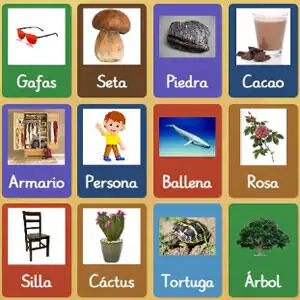
Living and Non-Living Things: a sorting game
About Living and Non-Living Things
Is a mushroom alive? What about a stone, or a cup of cocoa? In this educational game, kids learn to tell the difference between living and non-living things by sorting 16 picture cards into two groups. Each card shows an everyday item (animals, plants, household objects, food or elements of nature) and has an audio button to hear its name, so kids who are still learning to read can play too. It's an ideal resource to review the topic in preschool and the first years of primary school; you'll find many more resources like this in our educational games for kids.
How do you play Living and Non-Living Things?
The key is to remember what a living thing does: it is born, feeds, grows, interacts with its environment, reproduces and dies. The non-living things do none of these things.
- Read the name on the card or press the play button to hear it.
- Drag the card to the living things group or to the non-living things group.
- Repeat with all 16 cards and check your answers at the end.
Living and Non-Living Things controls
PC
- Click the play icon: hear the item's name
- Click and drag: move the card to its group
Mobile and tablet
- Tap and drag: move each card to its column
What do you learn in Living and Non-Living Things?
- The difference between living and non-living things based on the vital functions.
- That plants and fungi are living things too, even though they don't move.
- Vocabulary of animals, plants and objects, reinforced with audio.
- Sorting by criteria, a basic skill of scientific thinking.
Recommended from age 5.
Tips for playing better: Living and Non-Living Things
- Ask yourself a question with each card: “does this eat, grow and have babies?”. If the answer is no, it's a non-living thing.
- Watch out for the tricky ones: the mushroom and the cactus are alive even though they don't move, and the cocoa in the cup is an already processed food, not a plant.
- Objects made from something living are non-living: a wooden wardrobe or chair comes from a tree, but it no longer grows or feeds.
- For teachers: after the game, ask the class to find three living and three non-living things in the classroom or the playground to bring what they've learned into the real world.
Living and Non-Living Things FAQ
What are living and non-living things for kids?
Living things are those that are born, feed, grow, reproduce and die, like people, animals, plants and mushrooms. Non-living things don't carry out these functions: a stone, water or a chair.
What examples of non-living things appear in the game?
Among others, a pair of glasses, a stone, a wardrobe or a chair. They all go in the non-living things group.
What grade is this living and non-living things game for?
It fits in with the “understanding the world” area in preschool and with Natural Science in the first years of primary school.
Additional information: Living and Non-Living Things
Game type: Educational sorting game (natural science)
Recommended age: Ages 5 to 8
Technology: HTML5
Platform: Web browser (PC, tablet and mobile)
Enjoyed Living and Non-Living Things? Also try Multiplication Duck, PACMAN Multiplication Tables or Physical Map of Spain. Find more Educational Games for Kids and hundreds of games you can play in your browser on LudoRex.
🏷 Educational Games, Educational Games for Kids Aged 5 to 6, Educational Games for Kids Aged 6 to 7, Educational Games for Kids
Last update:
Games like Living and Non-Living Things
View all ›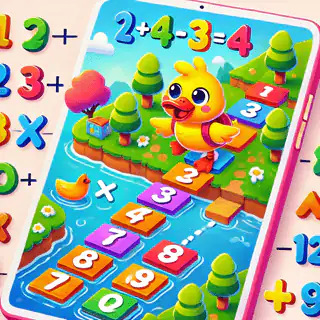 Multiplication Duck
 PACMAN Multiplication Tables
 Physical Map of Spain: Interactive Relief
 Tangram Online: Geometric Shapes Puzzle
 Handwriting Exercises Online: Letters and Numbers
 Map of the Autonomous Communities of Spain: game
 Morse Code: Crack the Secret Word
 Dinosaurs to Color Online: paint and save
 Pixel Art: Copy Pixelated Drawings on Your Grid
 Greater or Less: A Game to Compare Quantities
 Quizzland: General Knowledge Trivia
 Cartesian Plane for Kids: Coordinates Game
 Mazes for Kids: Follow Each Vehicle's Path
 Simon Says: Color and Sound Memory Game
 Online typing test in 5 languages
 English Alphabet: Letter Listening Game
 Rock, Paper, Scissors Online vs. the CPU
 Virtual Geoboard: copy shapes on the 5x5 board